First-Party Data for Shopify: Navigating Chrome Cookie Deprecation & Reclaiming Lost Ad ROAS
How high-growth e-commerce brands use server-side tracking, Conversions API (CAPI), and first-party data architectures to fix ad attribution and scale paid media.
- Written by
 Fahad, Founder — Head of Development
- Published
- Reading time
- 2 min
- Audit Standard
- Real CrUX Data

The foundation of digital advertising has fundamentally shifted. For over a decade, direct-to-consumer Shopify brands relied on third-party browser cookies to track visitor journeys, feed ad algorithms, and measure Return on Ad Spend (ROAS).
Today, that tracking mechanism is broken. Between Apple's Intelligent Tracking Prevention (ITP) capping Safari cookie lifespans at 7 days, browser ad-blockers running on 40% of desktop devices, and Google Chrome's Privacy Sandbox deprecating cross-site tracking, standard browser pixels now lose between 25% and 42% of customer purchase events.
The Consequences of Client-Side Tracking Failure
When your ad pixels fail to report conversions accurately back to Meta, Google, and TikTok, three expensive compounding problems occur:
- Algorithm Blindness: Ad platform machine-learning models cannot optimize toward high-value buyers if they only receive half your store's purchase signals.
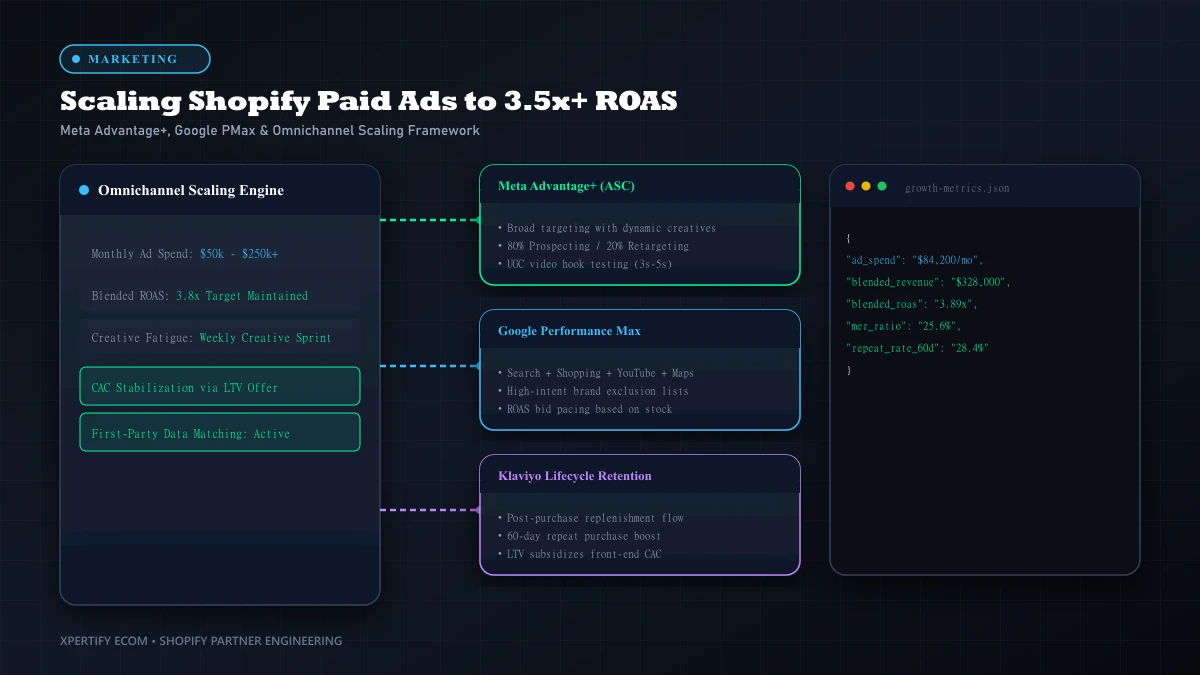
- Underreported ROAS: Ad dashboards report a 1.6x ROAS when actual blended returns are 2.8x, leading marketing teams to prematurely kill profitable campaigns.
- Bloated Retargeting Audiences: Visitors who already purchased items continue receiving aggressive retargeting ads because their checkout event was never matched, burning ad spend on existing customers.
The Solution: Server-Side Tracking & Conversions API (CAPI)
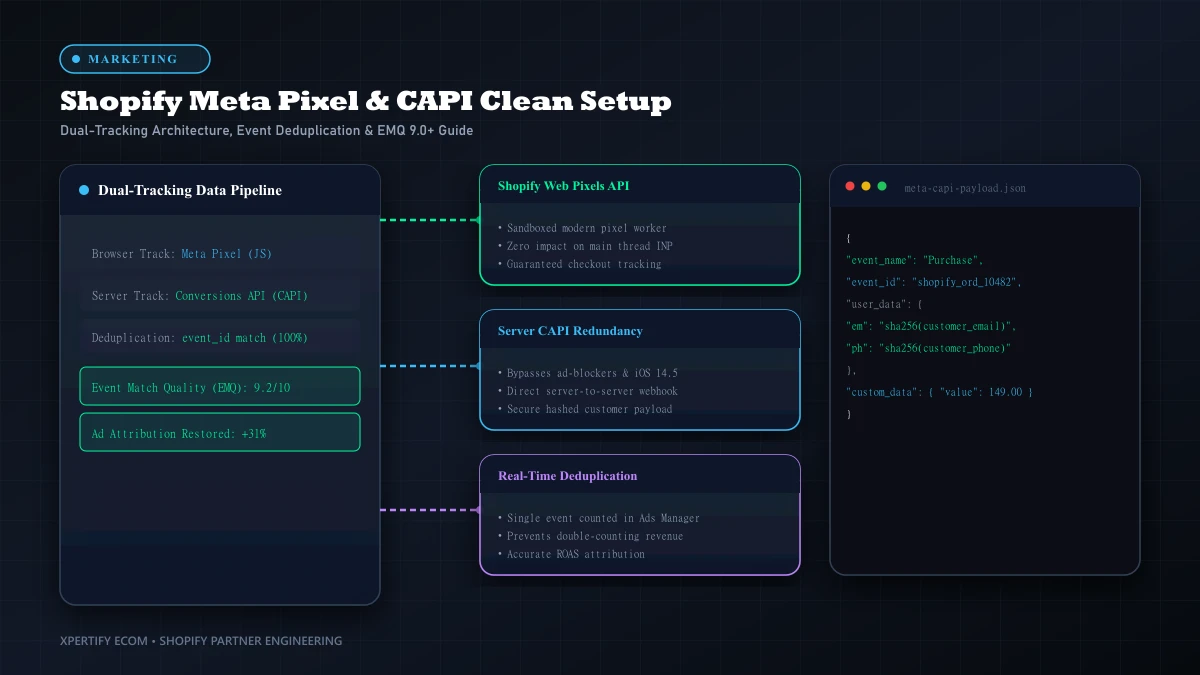
Instead of relying on fragile client-side browser scripts, modern e-commerce stores implement Server-Side Tracking. When a customer places an order, your secure server dispatches the conversion data directly to Meta and Google's servers over an encrypted API connection:
| Tracking Metric | Client-Side Browser Pixel | Server-Side Tracking (CAPI / sGTM) |
|---|---|---|
| Ad Blocker Resistance | 0% — Blocked by Brave, uBlock, and Safari shields | 100% immune — Dispatched directly from server to ad network API |
| Cookie Lifespan | Capped at 1 to 7 days by Apple ITP | Up to 365 days when configured with first-party custom domain HTTP cookies |
| Event Match Quality (EMQ) | Typically 4.5 to 6.0 out of 10 | Consistently 8.8 to 9.5+ with hashed user parameters (email, phone, IP) |
| Browser Page Speed Impact | Heavy script execution slows mobile load time | Zero browser bloat; heavy payload processed on edge cloud workers |
Zero-Party Data Collection: The Ultimate Growth Moat
In our Shopify marketing and technical tracking services, we pair server-side CAPI with native zero-party data funnels. By implementing customized interactive sizing quizzes, skin type diagnostic tools, or gift recommendation flows, brands capture direct customer preferences, email addresses, and phone numbers before checkout.
This first-party data is automatically synced to Klaviyo and Meta Custom Audiences, creating segmented automated flows that generate recurring revenue without relying on third-party ad tracking.
Losing conversion attribution on Meta and Google Ads? Our tracking engineers configure robust Conversions API, event deduplication, and first-party data architectures.
Upgrade to Server-Side Tracking